.png)
In brief: glucosamine is an amino sugar and a structural component of glycosaminoglycan molecules, which form part of cartilage. In dietary supplements, it is available in different forms, including glucosamine sulfate and glucosamine hydrochloride. [1]
What is glucosamine sulfate?
Glucosamine sulfate is one of the chemical forms of glucosamine. Glucosamine itself is an amino sugar associated with the formation of glycosaminoglycans — substances that are part of cartilage tissue structure. [1]
However, the biochemical role of a substance in the body and the effect of taking it as a dietary supplement are not the same thing. The fact that glucosamine participates in tissue structure does not mean that a dietary supplement automatically “rebuilds cartilage”.
What does the name “glucosamine sulfate” mean?
Both parts of the name are important. Glucosamine is the organic compound itself, while sulfate indicates the form in which it is present.
The sulfate ion has the formula SO₄²⁻. This is why sulfur is present in the chemical composition of glucosamine sulfate. [2] [3]
The exact form of the substance should be checked on the label, because “glucosamine” does not refer to one single form. Dietary supplements may contain, for example, glucosamine sulfate or glucosamine hydrochloride. [1] [4]
Glucosamine sulfate and sulfur: what is the connection?
Yes, glucosamine sulfate contains sulfur, but the amount of glucosamine sulfate is not the same as the amount of sulfur.
Sulfur is part of the sulfate component of the molecule. However, a label statement such as “140 mg of glucosamine sulfate” does not mean “140 mg of sulfur”.
In addition, stabilized forms of glucosamine sulfate may be used in raw materials, including forms with sodium chloride or potassium chloride. [5] [6] Therefore, calculating the amount of elemental sulfur solely from the stated amount of glucosamine sulfate is not appropriate without knowing the exact specification of the form used.
Glucosamine sulfate vs glucosamine hydrochloride: what is the difference?
Glucosamine sulfate and glucosamine hydrochloride are different forms of glucosamine. [3] [4]
Results from studies of one form should therefore not automatically be applied to another. When evaluating scientific evidence, it is important to consider which form of glucosamine was studied, at what dose, for how long, and in which group of participants.
Why is glucosamine so often discussed in relation to joints?
Glucosamine is an amino sugar involved in the formation of glycosaminoglycans — substances that are part of cartilage tissue structure. This biochemical role is one of the reasons why different forms of glucosamine have been studied for many years in the context of joint health. [1]
It is important to distinguish between the biological role of a substance in the body and the outcome of taking it as a dietary supplement. The fact that a substance participates in tissue structure or biochemistry does not by itself prove that taking more of it will restore that tissue.
What does research show?
Glucosamine has been studied for many years in the context of joint health. Research findings are mixed: some studies of glucosamine sulfate have reported positive results for certain outcomes, while other studies have not confirmed the same benefit. [1]
For example, individual clinical trials have studied glucosamine sulfate at a dose of 1500 mg per day for six months or for several years. [8] [9] These are descriptions of the conditions used in specific studies, not dosage recommendations and not evidence of an effect for any particular product.
EFSA also assessed a health claim concerning glucosamine and the maintenance of normal joint cartilage and concluded that a cause-and-effect relationship had not been established for the assessed claim. [7] This conclusion relates specifically to the evaluated health claim and does not mean that all research on glucosamine can be reduced to a single result.
When reading glucosamine research, it is therefore important to look not only at the word “glucosamine”, but also at the form used, dose, duration, study design, and participant group.
What should be considered before use?
People who regularly take medicines or have chronic health conditions, as well as those who are pregnant or breastfeeding, should consult a healthcare professional before using glucosamine. [1]
This page is provided for reference purposes and does not replace individual medical advice.
Glucosamine sulfate in Fitocentr products
Below are Fitocentr products in which the presence of glucosamine sulfate has been confirmed from the current composition.
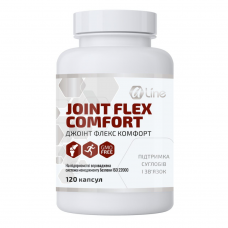
- Joint Flex Comfort A-Line, 120 capsules — 140 mg of glucosamine sulfate per capsule.
Other products are added to this list only after the current label or official composition has been verified.
About the Fitocentr Ingredient Guide
The Fitocentr Ingredient Guide was created to explain dietary supplement ingredients in clear language: what ingredient names and forms mean, what is known about them from scientific sources, and which products contain them.
Sources and scientific publications (9)
- NCCIH / NIH. Glucosamine and Chondroitin for Osteoarthritis: What You Need To Know. Overview of biochemical context, glucosamine forms, research findings, and safety considerations. View source
- PubChem / NIH — Sulfate Ion. Chemical record for the sulfate ion SO₄²⁻. View source
- PubChem / NIH — Glucosamine Sulfate. Chemical record for glucosamine sulfate. View source
- PubChem / NIH — Glucosamine Hydrochloride. Chemical record for glucosamine hydrochloride as another form of glucosamine. View source
- PubChem / NIH — Glucosamine sulfate sodium chloride. Example of a stabilized form of glucosamine sulfate. View source
- PubChem / NIH — Glucosamine sulfate potassium chloride. Example of a stabilized form of glucosamine sulfate. View source
- EFSA. Scientific Opinion on the substantiation of a health claim related to glucosamine and maintenance of normal joint cartilage. EFSA Journal. 2012;10(5):2691. View source
- Reginster JY et al. Lancet. 2001. Randomised, double-blind, placebo-controlled trial; 212 participants; glucosamine sulfate 1500 mg once daily; 3 years. PubMed
- Herrero-Beaumont G et al. GUIDE trial. 2007. Clinical trial of glucosamine sulfate 1500 mg once daily for 6 months. PubMed